
The Caribbean Coral Spawning Season | 2025 Recap
Published at: January 9th, 2026 by Mary DeasyFrom July through October, our Caribbean teams were busy monitoring and collecting coral spawn. Let's take a closer look at the events and collaborations that shaped the 2025 Caribbean coral spawning season.
In Mexico, Curacao and Florida our teams have packed up their spawn collection nets as the Caribbean coral spawning season has come to an end. Now our teams are busy outplanting the newly bred coral babies onto their reefs.
Coral spawning (i.e. coral reproduction) is determined by several factors—the lunar cycle, temperature and sunset time. Typically, the Caribbean season begins in July and goes until October. During these months of observation and coral spawn collection, some of our teams witnessed massive spawning events, such as the elkhorn spawning in August at Limones reef, Mexico. Let's take a closer look at this year's Caribbean coral spawning season.
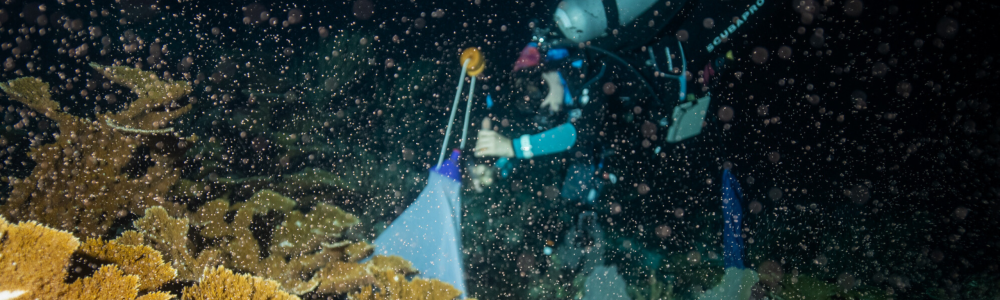 Paul Selvaggio
Mexico
Our team in Puerto Morelos, Quintana Roo, witnessed one of the most active coral spawning seasons in recent memory—especially in Limones where much of the corals had not spawned the previous year, 2024.
“In previous years, only some patches of colonies spawned because many were affected by bleaching. Particularly in Limones, Acropora palmata spawning had not been so abundant in many years; I think it was around 2013 when something similar in abundance was observed.” says Sandra Mendoza Quiroz, our Mexico-based Restoration Coordinator.
Working With Local Communities
During the spawning in August, Raúl Tecalco, our Mexico Restoration Technician, trained a dedicated group from CECIMS. CECIMS is a diver community from Punta Allen committed to the conservation of our ecosystems. Over the course of four days he taught them to monitor the spawning of elkhorn corals, also known as Acropora palmata. By monitoring the reef, they help to increase the data on coral spawning patterns in that region. Their contribution plays a vital role in sustainable coral restoration and ensuring long-term impact.
Coming Together For Coral Restoration
Our team was supported in their coral spawning work by our long-time partner Coralium Lab, Institute of Marine Sciences and Limnology Puerto Morelos (UNAM), as well as support from the Puerto Morelos Reef National Park, CECIMS, Fundación Carlos Slim, dedicated volunteers, students, local brigades and our favorite photographer, Paul Selvaggio. Paul visited our Mexico team during the August spawning to document the work of our team.
“I could feel the energy and excitement of my team and colleagues. The reef also had an energy that night.” says Paul, looking back at the spawning in Limones. “The huge stand of elkhorn colonies put on a show! They provided us with the hope for the next generation of corals on the reef!”
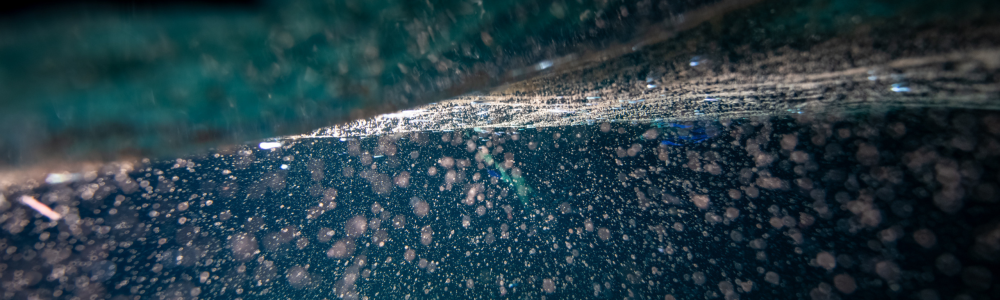 Paul Selvaggio
Florida
August brought the spawning season to Florida. “We had an incredibly successful field spawning season this year”, says Hannah Ditzler, our Florida-based Research Associate & Dive Safety Officer. "In August, I was in the water 7 nights in a row and observed spawning every single night. This included 2 species I have never seen spawn in South Florida before—Psuedodiploria strigosa and Colpophyllia natans.” Both of these species' spawnings were observed at the offshore South Spawning Hub of Nova Southeastern University.
Brain Coral Spawning
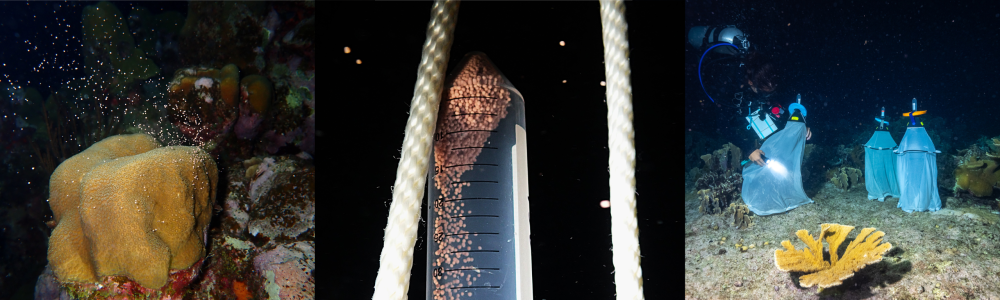
The Psuedodiploria strigosa, or symmetrical brain coral, spawned massively. Hannah and her team, alongside Nova Southeastern University, were able to collect over 2 million gamete bundles in just 2 nights. Gametes of Colpophyllia natans, also known as the boulder brain coral, was also collected. However, it exhibited unusual spawning behavior for the South Florida region by releasing its gametes—bundles of sperm and eggs—before sunset, deviating from its typical nighttime spawning pattern. Multiple factors influence spawning behavior so it’s not possible to say what could cause this behavior.
Staghorn Coral Spawning
Hannah and her team also worked alongside the University of Miami to collect Acropora cervicornis (i.e. staghorn coral), this has become somewhat of a yearly tradition. This year, they were able to collect spawn from an incredible number of parent colonies: 34 in total, representing 22 individual genotypes.
“During August spawning field operations, we observed 7 consecutive nights of spawning of 3 species, and there was a huge spawn in other parts of South Florida. This was a huge win for South Florida coral reefs and it made me feel hopeful about our efforts of restoring coral reefs.” Emily Timberman, SECORE intern at our Florida base.
Curaçao
In August, our team on Curaçao collected the first spawn from the elkhorn coral aka Acropora palmata. SECORE and Reef Renewal Foundation Curaçao led collection efforts at two dive sites. There was an incredible 95% fertilization rate of the collected gametes. This resulted in over 300,000 embryos from a combination of 12 parent colonies.
Exploring Curaçao’s Reefs
Our team partnered with Go West Diving, a local dive center at the western end of the island. Their support involved transportation on one of their diving vessels. In July, they explored the shallow reef habitats along the island’s west coast to locate healthy staghorn and elkhorn coral populations. Our team then used these sites for coral spawn collection in August.
In September, Go West Diving also kindly offered transportation for our team's spawn collection trip to Watamula, the westernmost point of Curaçao. Their hope was observing and collecting spawn from the lobed and mountainous star corals. For what felt like a final, end-of-the-season hurrah, both star coral species spawned massively over the course of two nights.
Collaborating with local dive centers expands our coral spawn collection efforts to more remote and healthier dive sites. It is also a good opportunity to share our experience with and to educate the diving community in coral reef ecology and how corals reproduce.
Preparing Substrates for Coral Spawning
Before coral spawn collection, there are many preparations that need to be made. For example, the preparation of substrates, aka Seeding Units. This is important for creating a favorable surface on which the coral larvae can settle.
Preparation begins by keeping the substrates submerged in coral's natural habitat–ocean water. This encourages a biofilm to grow on the substrates. The most effective micro-organisms to entice coral larvae to settle are Crustose Coralline Algae (CCA). However, during this process, some unwelcome guests can also attach themselves to the substrates. These unwanted microorganisms need to be removed. Each substrate is scrubbed which is labor intensive—for example, cleaning 1500 substrates may require five divers scrubbing for approximately four hours.
This year, our team in Curaçao ran several experiments to explore more effective ways of removing unwanted microorganisms from the substrates. They compared scrubbing, pressure‑washing, sun‑drying, and freezing. Pressure‑washing proved the most effective, cutting cleaning time to a fourth of scrubbing, and leading to the same result of scrubbing. Experiments like this are essential to streamline our efforts and enable coral restoration at a larger scale.
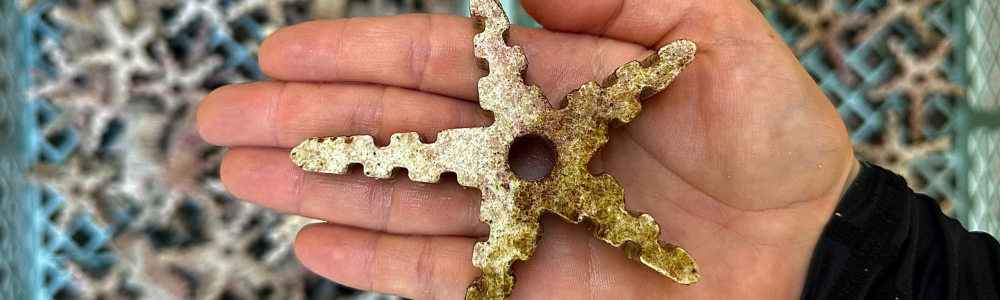 Lars ter Horst
It’s been a busy but successful coral spawning season for our Caribbean teams—marked by extraordinary coral spawning activity and strengthened through collaboration with local organizations and communities. Now, we look towards another ocean, the Indian Ocean. Make sure to follow us on Instagram, Facebook or LinkedIn to hear about their upcoming spawning season!
This form is protected by reCAPTCHA and the Google Privacy Policy and Terms of Service apply.