
Implementing Coral Seeding: A Growing Network of Partners
Published at: June 17th, 2026 by Mary DeasyReef Renewal Foundation Bonaire and Roatan Marine Park have graduated from our Training and Capacity Building program. This program is centered on Coral Seeding and aims at long-term investment in a region.
One of the greatest challenges to coral restoration is creating impact at a scale that actually matches the urgency of the coral crisis. At SECORE, we are taking a different approach to restoration. Instead of just planting corals, we combine reef research, innovative engineering, and hands-on training and capacity building to create effective, lasting global impact through our network of implementation partners.
Our restoration method of breeding coral is called Coral Seeding. Not only does this method promote genetic diversity, but it also enables mass production of coral larvae by taking advantage of corals’ own reproduction potential.
The Training and Capacity Building Program is a tailored hands-on program to equip local teams with the skills and knowledge necessary to lead successful, measurable Coral Seeding efforts in their own regions.
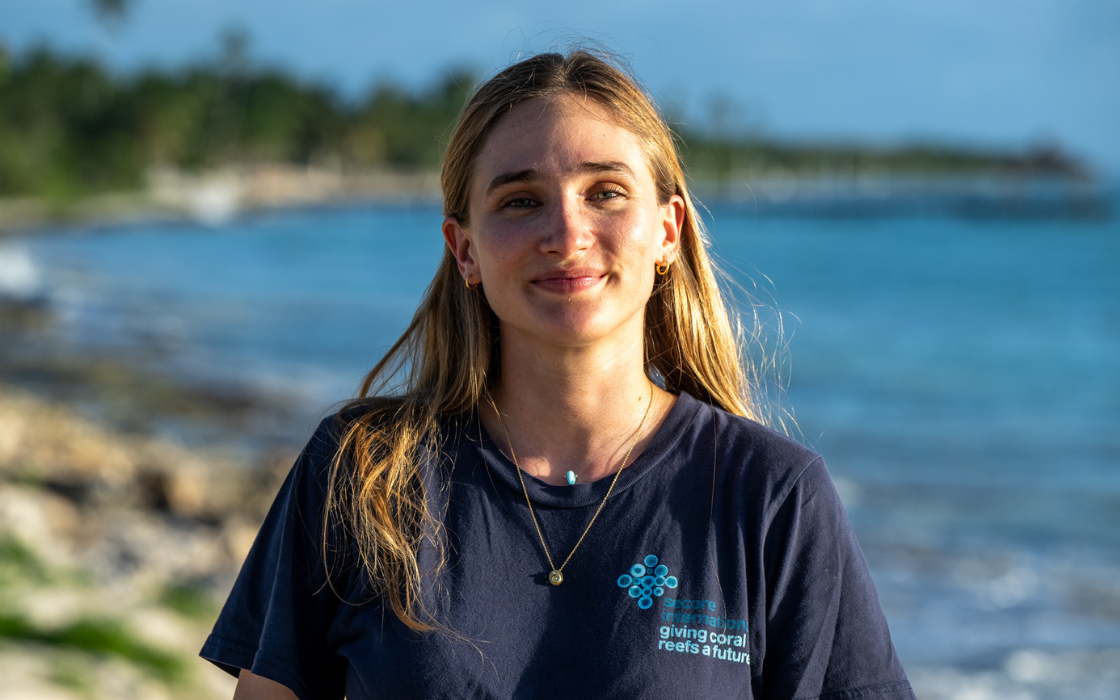
Tania Doblado Speck, SECORE's Caribbean Training Coordinator
“The program supports long-term investment in an area by building strong, locally rooted partnerships. We work closely with organizations that have deep connections to their communities and aim to scale Coral Seeding operations in their region,” says Tania.
“By investing in capacity building, knowledge sharing, and a sustainable financing model, we aim to support partners in leading and expanding coral restoration efforts over time. This approach helps ensure that restoration initiatives are effective, locally driven, and sustainable in the long term."
How it works
Partners commit to a five-year program that consists of virtual and in-person training events and seminars. Whilst in the training program, a partner is considered in the first phase: the learning phase. Once graduated, partners can advance to the second phase, where they apply their skills to lead independent Coral Seeding projects, thereby teaching further organizations in coral reef restoration through sexual reproduction. At this stage, SECORE’s role shifts from mentor to collaborators and our partners, from trainee to trainer.
We have four partners who have completed the first phase of our Training and Capacity Building program and have moved onto the second phase of our partnership. Two of them did so this year, 2026: Roatan Marine Park and Reef Renewal Bonaire.
Roatan Marine Park
Roatan Marine Park, located on Roatán, an island of Honduras, famous for its diving and snorkeling on the Mesoamerican Barrier Reef, wildlife, as well as its white-sand beaches, joined our Training & Capacity Building program in 2021. “The first years of the program were very much a process of learning and adapting. We were continuously refining predictive spawning calendars, improving spawning windows, extending monitoring efforts, and adjusting methodologies as we learned more each season,” says Carolina Rojas, Roatan Marine Park Reef Restoration Coordinator. Although there was much to learn and test, Roatan Marine Park jumped in head first. In addition to online training sessions and seminars, our implementation team—led by Aric Bickel, Senior Director of Training and Implementation—conducted several in-person visits to support their progress and provide guidance.
Roatan Marine Park also leveraged our interconnected network of partners by visiting FUNDEMAR—our program's first graduate—to gain hands-on experience in Acropora palmata spawning monitoring, assembly and deployment of our Coral Rearing In-situ Basin (also referred to as the CRIB), and rearing of coral larvae in a laboratory setting. This peer-to-peer learning paid off quickly. Roatan Marine Park achieved their first successful settlement of Diploria labyrinthiformis (grooved brain coral) in the CRIB and by June 2023, 1,188 Seeding Units with attached coral babies were outplanted.
 Margaret Miller
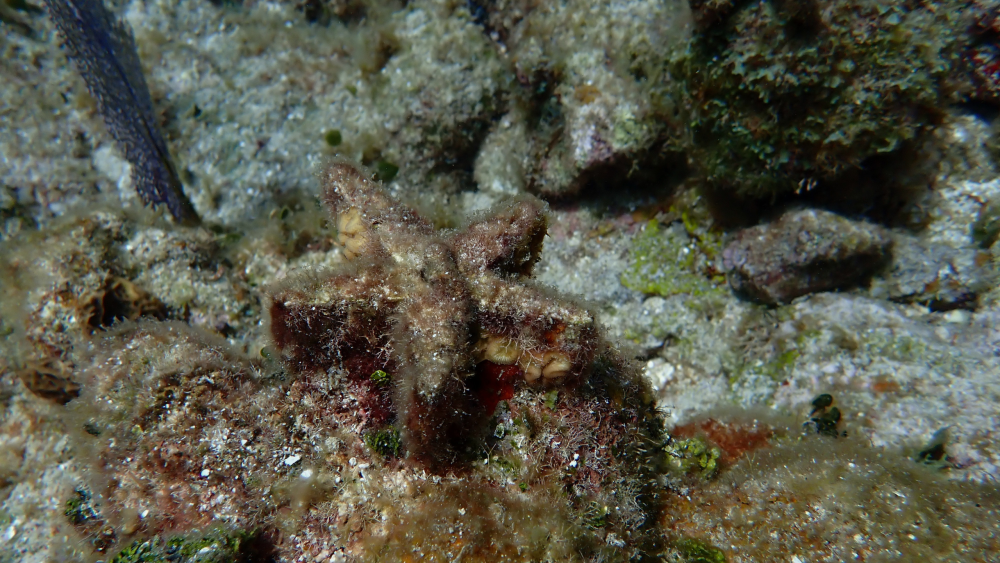
Meet Jigglypuff
Later that year came the Caribbean heatwave that caused severe mass bleaching across the region. “At the time, we truly believed the recruits would not survive those conditions. Even after conducting monitoring efforts around March 2024 and not immediately observing settlers, we assumed we had lost them. Then, during a later monitoring effort, we discovered our very first surviving recruit, affectionately nicknamed “Jigglypuff” by the community. Finding that tiny coral alive completely changed our perspective and gave us renewed hope. That moment reminded us that persistence and patience are just as important as the science itself,” says Carolina.
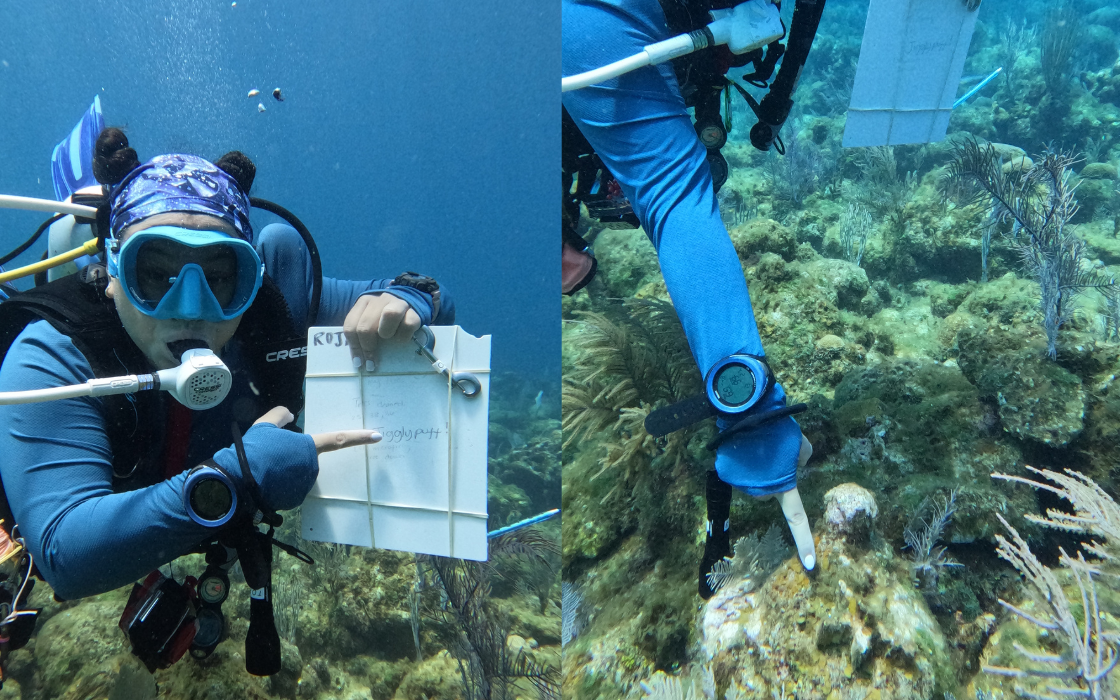
The following year, they kickstarted their Spawn Watch program which encourages the local community to get involved in spawning monitoring. The Spawn Watch has been successfully running every year since, supported by five dive centers. Now in 2026, they officially graduated from our Training and Capacity Building Program and we are happy to announce that SECORE and Rotatan Marine Park have signed a new Memorandum of Understanding to continue the collaboration.
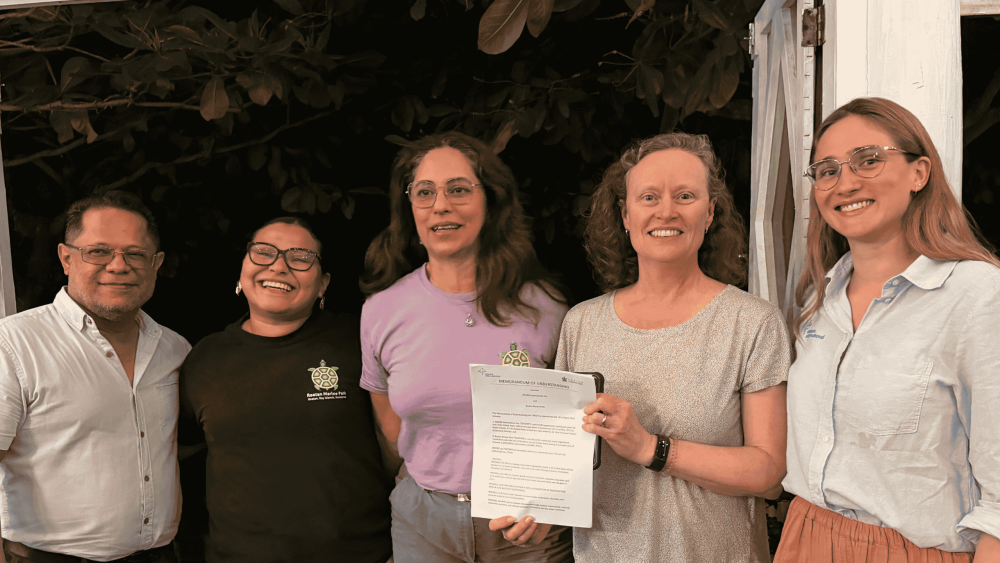 © Tania Doblado Speck
Reef Renewal Foundation Bonaire
Reef Renewal Foundation Bonaire is located on Bonaire, the neighboring island to Curaçao, where one of the SECORE offices is located. Collaboration between Reef Renewal Bonaire and SECORE started over 8 years ago. Their close proximity to our team made it easier to join forces on reef restoration efforts. They even attended our inaugural in-person Coral Seeding training alongside our other first implementation partners FUNDEMAR, ECOMARES and PIMS. Since those early days, Reef Renewal Foundation Bonaire has played a pivotal role in refining our restoration toolkit. By serving as a testing ground for our technologies, their feedback has created improvements in our Coral Seeding technology, most notably leading to better iterations of our Coral Seeding tents.
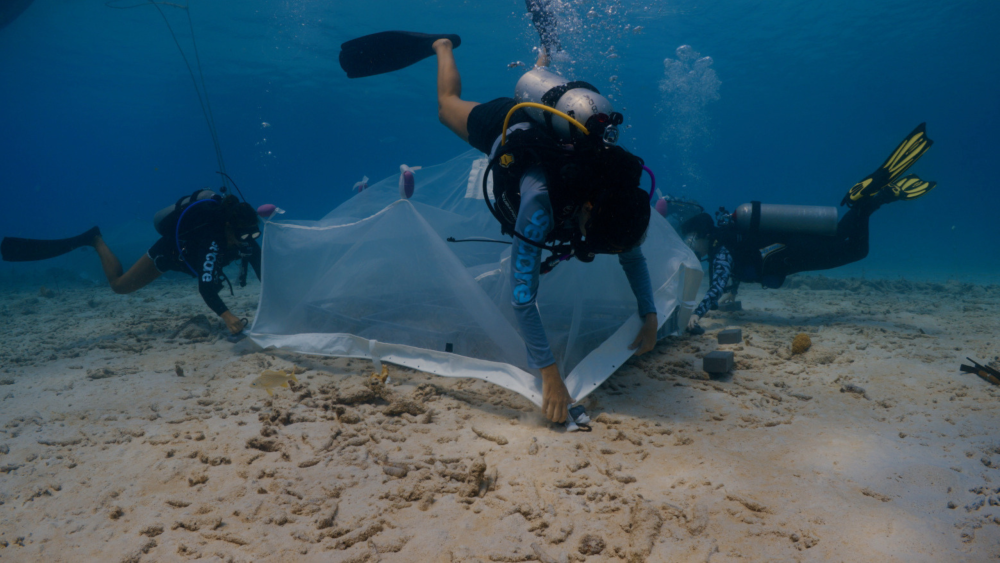 © Reef Patrol
Reef Renewal Foundation Bonaire are experts in fragmentation—simplified—the process of taking a piece of a coral to replant and grow elsewhere. Their participation in our training program, premised on sexual coral reproduction, introduced a steep learning curve, which was exacerbated at the time by a team of three. But that did not stop them. Throughout the program their knowledge and their operational capacity grew exponentially. “Over the years, we have worked closely with the SECORE team to learn, implement, and refine the full coral breeding process—from spawning monitoring and gamete collection to larval rearing, settlement, and outplanting. Together, we have adapted these techniques to local species, environmental conditions, and operational realities, allowing us to scale breeding efforts from small pilot projects to a program that now supports multiple coral species,” says Caitie Reza, Reef Renewal Foundation Bonaire Communication & Development Officer.
Our Coral Seeding program is not just about training but also capacity building. Reef Renewal Bonaire upgraded their infrastructure by developing their Coral Lab, a comprehensive wet and dry lab system—supported by the joint Caribbean CORDAP project with Fundemar, SECORE, and Reef Renewal Foundation Bonaire, and further funding by the Dutch government and the Rose Family Foundation. The Coral Lab is a key component of their Coral Seeding efforts by serving as a ‘grow-out facility’ for baby corals to develop and become stronger before being outplanted on the reef. This helps increase coral survival at early stages.
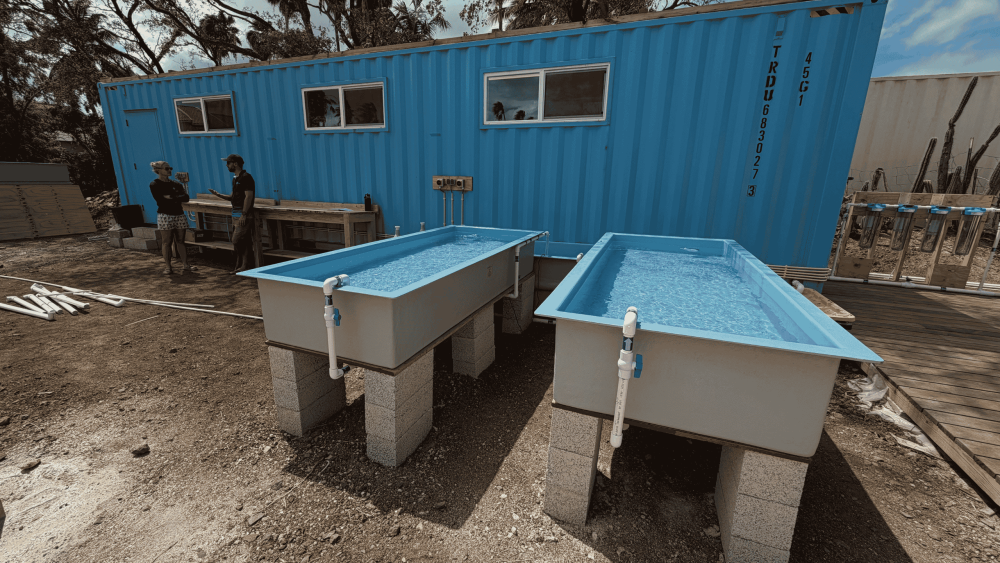 © Tania Doblado Speck
Since they joined our Training and Capacity Building Program in 2019, they’ve also expanded their staff to 14 and currently have four interns. This growth reflects their commitment to scaling restoration efforts and building long-term local capacity. “Today, coral breeding is a core part of our work in Bonaire, helping to ensure that restoration efforts not only rebuild reef structure, but also strengthen the long-term resilience of reef ecosystems under changing ocean conditions,” says Caitie.
This year, they officially graduated from SECORE’s Training and Capacity Building Program and have signed a new Memorandum of Understanding to continue collaboration between SECORE and Reef Renewal Foundation Bonaire. “As a Training Partner, we are excited not only to share the experience and lessons learned in Bonaire with other organizations throughout the region, but also to continue working with SECORE to refine and advance coral breeding techniques for reef restoration worldwide.”
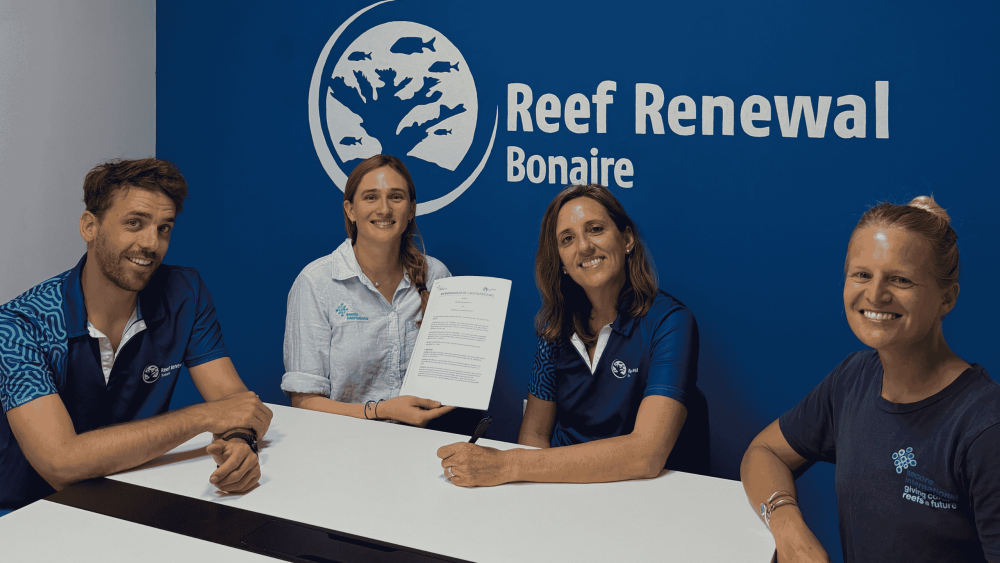 © Reef Renewal Foundation Bonaire
This form is protected by reCAPTCHA and the Google Privacy Policy and Terms of Service apply.